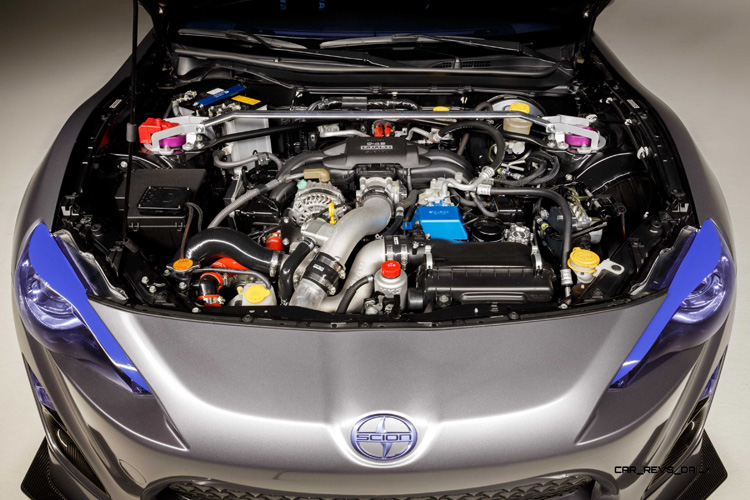
Turbo Supercharger Brz
Amman songs devotional tamil mp3. Many devotional songs same this amman songs in tamil. You can listening amman songs in tamil anytime on your mobile phone. Listen to Many tamil Devotional hit All of the above lord amman Devotional tamil songs same amman songs in tamil. Listen to live tamil devotional video songs in tamil devotional 2017.
Personally, I think the BRZ is better off with a supercharger. Better low end power, a solid bump in torque. They've balanced the turbos out a lot. The 2017 Subaru BRZ / Toyota 86’s 2.0-liter engine remains naturally aspirated. There’s no turbo model for 2017 and there never will be. Even though performance enthusiasts would like one.
I have been doing research into adding FI to my car, and have been looking into the supercharger route. It wasn't until earlier today when I was told by my friend (a mechanic) that based on the tune I could get boost from a turbocharger at around 3,000 RPM. I dont redline the car, but I'm wondering from a maintenance standpoint, which is easier to maintain and which will give me more pleasurable driving experience for its cost (initial and long run). A lot of these threads come down to 'do this over that' or 'don't do that' bashing of other members comments, but I am looking for well rounded answers about experiences dealing with both. As for what I'm looking at doing.I'm looking to make a car that is still DD, but I can bring to the track at least once or twice a month and have some fun in it. I want something that is reliable but that is FI.
I have looked into upgrading parts of the engine in order to allow it to take the extra workload of the FI system I want to add.I have done research on both, but as it seems that most people get power at different points of the RPM spectrum (SC at the lower end, TC at the higher end), I was wondering if it was possible to get it to work with boost being produced at lower RPMs with a turbo.Thanks again. There's always a big debate when it comes to supercharging vs turbocharging. With turbos certain options will spool up quicker than others giving you more power in the midrange, but for the most part they all tend to spool fully at 3000RPM at least. The turbos that spool up the quickest are generally smaller in size and smaller in turbine but because they are small their efficiency levels aren't going to allow you to run big boost numbers (aka high power).Superchargers you don't really have as many options with. Superchargers you can't really go to one company and say I want this size and I want it to spool at this RPM etc.
Vortech for example has one, and only one blower to use on this car, it's the V3Si which I use on my own personal vehicle. It's very quiet, it's very smooth, very daily driven friendly with very minimal maintenance needed.Vortech makes a great supercharger, Full Blown makes a great turbo kit. I think you should also take into consideration pricing though as well. Feel free to send me a message if you have any questions on particular systems though, but I think generally based on your statement of wanting a low investment, superchargers in the short and long term will end up costing less money than a turbo will. Well it's sure a dilemma. As said before superchargers your kind of stuck on only a few sizes and boost.Where as turbo you can aways go bigger and more boost.But if all you want is daily driving with fun at the track, I would recommend keeping it stock and focus on suspension wide light weight wheels with super sticky tires and lots of track day events.If you really want FI at low rpm's then supercharge is the way to go.
Really all these kits either turbo or supercharge are great kits, you really can't go wrong either way it just comes down to how much you want to spend. Remember there are two types of superchargers PD and centrifugal.
Centrifugal are essentially all lag the fun part of the power band is 5-7.5k, you need to be in the lowest possible gear to get the most out. The PD comes in sooner under 3-4K but lacks top end hp and total output. A properly size turbo like the GTX28 or AVO's 18g will spool in 2.5-4k range giving more area under the curve. You know there is a reason why OEM's use turbos much much more than superchargers.
No OEM except maybe one exotic uses a centrifugal so take that into thought. A few use PD's but are V6 and V8's. I sincerely missed forced induction from my last two Subies. Windows 7 professional 64-bit free download.
It has taken me nearly three years of watching, reading, researching and waiting. I have ordered the Edelbrock system as it offers reasonable bang for the buck (imho) plenty of overhead, and for now CARB certification as I don't know where I will be living when I return to the US. Look seriously at your needs and then the pros and cons of what systems meet your needs.

Your desires are going to drive your purchase, keep that in mind as you put your hard earned cash behind it. An informed purchase will normally be your best purchase. I DD my turbo set up, your just going to need to have more frequent service intervals. People advise against having FI on a DD, if you do things correctly with which ever FI system you go for, aka reputable installer and supporting mods depending on power goals, you will minimise potential down time( you can never rule it out though)I never understood guys who advised against FI on a DD. I'm the same way, I have no problems on my Vortech system, and I've had plenty with the same Vortech system on multiple different platforms not have issues, even with BMW's I never have issues with supercharging and those things are not as reliable as these cars are of course.
Remember there are two types of superchargers PD and centrifugal. Centrifugal are essentially all lag the fun part of the power band is 5-7.5k, you need to be in the lowest possible gear to get the most out. The PD comes in sooner under 3-4K but lacks top end hp and total output. A properly size turbo like the GTX28 or AVO's 18g will spool in 2.5-4k range giving more area under the curve.
You know there is a reason why OEM's use turbos much much more than superchargers. No OEM except maybe one exotic uses a centrifugal so take that into thought. A few use PD's but are V6 and V8's.You mean Koenigsegg, who used twin Rotrex superchargers?Christian von Koenigsegg is known for being a mavrick and being rather uncompromising. His 3d printed turbos are ridiculous.
The and have been tearing up in sales lately, becoming the No. 2 selling cars, respectively. This comes as quite a surprise, considering they both were met with some minor grumbling over the fact that neither had any plans for a turbocharged model any time soon.That phrase “any time soon” really only applies to the, as Subaru and both have made it clear that customers looking to buy a will not be likely to ante up the extra dough needed for forced induction, so they effectively eliminated the FR-S from the boost talks.
The BRZ, on the other hand, is marketed to the higher-end customer that just might pony up some extra Benjamins for some spoolage. However, that term “any time soon” rears up again, and we are stuck wondering what Subaru’s idea of “soon” really is.With the recent announcement from Subaru about the addition of a – the engine that the FR-S and BRZ come with – and its use in the upcoming Legacy sedan and wagon, we are starting to think the any time soon period has officially ended. We anticipate seeing a BRZ with a turbocharger hitting showrooms in the 2015 model year, at the latest, but the paltry 296 horsepower that the current boosted FA-20 produces won’t hold a candle to the version that the BRZ will see.Click past the jump to read our thoughts and ideas on what this 2015 Subaru BRZ will have to offer.
With this STI package would come a set of 18-inch alloy wheels, a complete body kit, and a wing to keep the rear end in check at high speeds. We wouldn’t be surprised to see Subaru sneak in a little movement in the wing to increase or decrease downforce, as needed. Smoked headlights and taillights would also be a nice touch, giving the BRZ Turbo a more mysterious look, but Subaru is not big on customizing the lighting.As we inch closer to the BRZ Turbo – if it bears the STI badge – we will continue to update the exterior with actual data from Subaru. We would anticipate the BRZ Turbo coming with full leather interior, but not just plain old leather. Subaru will certainly add some contrasting stitching to the seats, as well as STI embroidery to remind you what’s under the hood, if it boasts the STI badge.The BRZ Turbo will come standard with all of the gadgets and gizmos that the regular BRZ currently has, including: voice-activated GPS, 8-speaker HD Radio stereo system, Bluetooth, iPod control, keyless entry, etc. In addition to these standard features, you can anticipate the obligatory boost gauge, yaw control, and maybe even a turbo timer.Just like with the exterior, we have not received any confirmation from Subaru, so we will add more information as it becomes available.
Engine and Drivetrain. Subaru FA20 EngineUnder the hood is about the only place that we have a little bit of information from Subaru to pass on. Granted, the information is from the upcoming, but we at least have a base to go off of. The FA-20 turbo that is going into the upcoming punches out 296 horsepower and 295 pound-feet of torque. Its biggest limitation is that it bolts up to a soft and weak CVT.
We have a strong feeling that Subaru had to detune the FA-20 after installing the turbo to help preserve the CVT’s lifespan.If a BRZ Turbo hits showroom floors in 2015, it will not bear a crappy CVT – at least it had better not – and therefore, can push the FA-20 to its limits. We anticipate a horsepower number north of 325 and a torque rating in the 350s, which would make this 2+2 hatchback a screamer. The transmission we expect to see connected to the FA-20 turbo would be the same 6-speed manual that connects to it on the current BRZ, and maybe an optional dual-clutch automatic.If Subaru is going to boost the BRZ, chances are that it will include all-wheel drive.
It would be a bit of a waste to have a hopped up Subaru pushing power only to the rear wheels. This would also include the ability to adjust the torque ratio from front to back, in order to compensate for varying driving and track conditions. Set the torque to full-rear and rip that ass end loose in the twisties. Want to stomp some V-8-powered car into the ground?
Set the torque to a 50-50 distribution and watch the V-8 vaporize its tires as your BRZ squats and scoots its way to the finish.With the 200-horsepower, rear-driven 2012 BRZ hitting 60 mph in as little as 6.4 seconds and covering a quarter-mile in just 14.9 seconds at a top speed of 95.5 mph, it is already a fairly peppy little car. Pump in an extra 125 ponies and AWD, and you have a car that we estimate hitting 60 mph in about 4.6 seconds and covering the quarter in roughly 13 seconds at 110 mph.This is still all preliminary speculation on our end, but in our own little magical world, the BRZ turbo is one for the ages. Hopefully Subaru can deliver on our expectations. Suspension and Braking.
The BRZ is already an impeccable handling vehicle, so we don’t expect to see too much modification here. The most likely changes to the suspension will be the addition of thicker sway bars on the front and rear, and possibly adding in strut tower braces.The brakes on the turbo model will likely boast a set of slightly larger diameter rotors, and 4-pot calipers for a little extra squeeze.The most notable difference in the BRZ Turbo’s handling system will be larger section width tires. The current BRZ boasts 215 mm (8.46-inch) section width tires, and with the taller and wider rims, we would figure on seeing 225 mm (8.85-inch) tires. This gives the Subaru more rubber to bite the road with, thereby increasing its handling and braking performance.We’ll update you more on the suspension once Subaru gives us an idea of what it’s thinking with this model.
While guessing a price for a high-performance model like this is tough, we can use some educated assumption in pinpointing a price range. We’ll use the WRX as a basic template. The base model WRX has a $25,595 MSRP, and the WRX STI has a $34,095 base price. The difference between the two levels is $8,500, which is a 33 percent markup on the base model.Using that markup, we can reasonably say that based on the base MSRP of the BRZ, which is $25,495, we can estimate a price of roughly $34,000. Again, this is purely just using known variables to estimate the complete unknown, so don’t start setting up financing just yet. CompetitionWe are heading into the true unknown with the BRZ Turbo’s competition.
We do know that Ford is redesigning the. There are also rumors of this model boasting a 2.3-liter EcoBoost engine that supposedly pumps out 330 horsepower, which rumors are pointing to being installed in a resurrected. This is the only true competitor that we can point to now, but the information is just so scarce on the mustang redesign that we can’t make a comparison just yet.We can say that the two will be very close to one another in performance, especially if Ford fits the Mustang with AWD.