Vision Alistair Macleod
NO GREAT MISCHIEF
By Alistair MacLeod.
Alistair MacLeod is a Canadian of Scottish descent, and, like John McGahern who has written a foreword to his collected stories, an astute observer of a very specific local setting – Cape Breton, Nova Scotia; of its landscape and industry, its closed communities, quotidian tragedies and domestic disappointments.
283 pp. New York:
W. W. Norton & Company. $23.95.
A MONTH ago, the fiction of Alistair MacLeod was entirely unknown to me. The 64-year-old Canadian writer has published just three books, and 'No Great Mischief,' his only novel, is the first of them to be widely available in the United States. Having spent the last few weeks reading, in avid succession, volumes that his Canadian devotees have been given after long intervals of anticipation, I can report that MacLeod's world of Cape Breton -- with its Scottish fishermen and their displaced heirs, the miners and young professionals it has mournfully sent to the rest of the nation -- has become a permanent part of my own inner library.
The great extended family or clan, its members forever battling among themselves and just as reliably uniting against outside foes, is these days more at home on television than in the pages of serious fiction. But in 'No Great Mischief,' MacLeod's lyricism succeeds in leaving a reader both harrowed by and envious of all the sorrow, violence and ravenous love demanded by the MacDonald family bloodlines. The novel's narrator and contemporary focus -- an orthodontist named Alexander -- may seem at first a pale attenuation of his Cape Breton kin, but he lives in a tumult of memory and longing that eventually becomes the reader's own. Alexander's real commute is not the depressing, obligatory Saturday drive that he makes across Ontario to check on his alcoholic older brother, Calum; it is his ceaseless ride on the past-present shuttle of his creator's imagination.
When the drink-damaged Calum looks out into the alley behind his shabby Toronto room, he doesn't see 'the erratic fire escapes and the resting garbage' but rather a cliff in distant Cape Breton where the blackfish are jumping near the gravestone of his ancestor, Calum Ruadh. And it isn't the brandy that gives him the vision; it's the psychic pull of that great-great-great-grandfather, who set out from Scotland in 1779 at the age of 55; who lost his second wife on the voyage; whose dog swam out to the departing ship and insisted on making the journey; who lived a second 55 years on Cape Breton -- and whose songs have been sung in Gaelic to all his descendants.
Much of MacLeod's novel is told in flashbacks (a beside-the-point term to any writer more interested in the past than the present) while Alexander goes to get beer for his brother. As he crosses the streets of Toronto, association and memory assemble a host of MacDonalds, including some of the clan's many other Alexanders, one of them the narrator's cousin, killed years before in a uranium mine: 'While I was going forth into a world of perfect teeth, his unanticipated death was waiting for him in a hole in the ground.'
The life of the narrating Alexander has always been governed by sudden death and persistent ghosts. When he was a child, his parents and another older brother were drowned while walking across the frozen channel to the island where his father kept the lighthouse. As always, MacLeod spreads an unbearable calm over this calamity: 'Everyone could see their three dark forms and the smaller one of the dog outlined upon the whiteness over which they traveled. By the time they were halfway across, it was dusk and out there on the ice they lit their lanterns, and that too was seen from the shore. And then they continued on their way. Then the lanterns seemed to waver and almost to dance wildly, and one described an arc in what was now the darkness and then was still.'
Continue reading the main storyYoung Alexander and his twin sister -- Sometimes they would refer to us as the 'lucky' children and sometimes as the 'unlucky' children' -- are left to be raised by the older generation. Their two grandfathers are a study in contrasts, one as fastidious as the other is tippling and merry. The first prefers straight history to legend; the other always sees the MacDonald forebears in full cry and 'coming home in the sun.' Alexander grows up less rough than his surviving older brothers, who sleep with loaded rifles under their beds and 'in the hot summer nights, after drinking beer . . . raise their upstairs windows and urinate down the outside clapboard walls.' Still, just after finishing college, he doesn't hesitate to join them in the mines to finish the hitch of his namesake cousin. There the brothers also band together to aid a more distant young relative, yet another Alexander MacDonald, of San Francisco, who has fled to Canada to dodge the draft. It is this particular act of blood loyalty that sets up the book's final catastrophe.
MacLeod's tenderness -- his sympathy for all these hard-drinking, lonely, wind-scattered island people -- extends even to the animals that live and die in their midst. His fiction regularly breaks the heart with knackered horses, beached whales, dogs martyred for faithfulness to a master. But there is no sentimental showmanship to what he does: the animals are trapped by the same whirling forces as the people. Beasts and humans share, and inflict on each other, some gruesome cruelties: a drowned fisherman in an early story called 'The Boat' has his eyes pecked out by sea gulls; Calum MacDonald uses a horse and some fishing line to extract his own infected tooth. These grim incidents reflect a naturalism that is singularly natural, not the deterministic Grand Guignol typically indicated by this literary term. The title's words, 'No great mischief,' were once scornfully applied by General Wolfe to the Highlanders fighting alongside him on the Plains of Abraham: 'No great mischief if they fall.' In MacLeod's work, the phrase voices our great misapprehension about the significance of almost every creature that draws breath; the author would swear that, for all their apparent inconsequence, each one of them hovers over a small diaspora of others.
Newsletter Sign Up
Continue reading the main storyThank you for subscribing.
An error has occurred. Please try again later.
You are already subscribed to this email.
- Opt out or contact us anytime
MacLeod is too thoroughly at home in the short story to make his late-career transition to novel writing without some stumbles. The MacDonalds' history, unfolded by the telling and retelling of famous deeds, often seems more like an episodic saga than a novel. In the attempt to convey truths of thought and emotion, 'No Great Mischief' is also oddly more explicit than MacLeod's short fiction. A story has so much less time to accomplish its thematic work that the temptation to deploy an italicized moral is usually greater than in the more capacious novel; yet MacLeod betrays a certain anxiety about the size of this new expanse he has to govern, and he winds up policing some of its pages with a needlessly heavy hand.
There is a lot of underscoring: on the same page that Calum MacDonald quotes Robert Frost ('When you have to go there, they have to take you in'), the narrator notes how their draft-dodging kinsman wears 'a Celtic ring upon his finger. The never-ending circle.' Most obtrusively, the narrator's sister has grown up into a spokeswoman instead of a character. Deracinated and wistful, living in a 'modernistic house in Calgary,' she warns her brother: 'Perhaps you and I idealize our parents too much because we scarcely remember them. They are the 'idea' of parents rather than real people.' She even seems aware of herself as a device: ' 'But, this is a long digression,' she sighed.'
SHEER passion for what he wants to impart also plays a role in MacLeod's excesses. When the narrator tells us that his cousin Alexander's suspicious death -- killed by a bucket being lowered into the mine shaft -- reminds him of how Mac Ian of Glencoe was murdered near his bed in 1692 ('Propelled forward and downward by the unseen and unexpected force at the back of his head . . . his hair dyed forever brighter by the crimson of his blood'), we feel the author trying to will meaning into the connection, just as he seeks to give every MacDonald brawl perhaps more than its heroic due. Even so, the attempt feels more ennobling than effortful. One does well to keep in mind that a writer can only overemphasize his themes by first having any themes at all. MacLeod's are hugely bigger than the special pleadings that pass for argument in much contemporary fiction.
The latest Tweets from Kill Rock Stars (@killrockstars). Independent record label founded in Olympia, WA in 1991 and now based in Portland, OR 🎷. Kill Rock Stars accepts and listens to demos from active, touring bands. If you are not in an active, touring band please refrain from sending us your demo. Our focus is partnering with hard working artists that we are passionate about for a mutually beneficial relationship. Here's a few demo tips from the KRS staff. Kill Rock Stars is an independent record label founded in 1991 by Slim Moon and Tinuviel Sampson, and based in both Olympia, Washington, and Portland, Oregon. The label has released a variety of work in different genres, but was originally known for its commitment to underground punk rock bands and the Olympia area music scene. Kill rock stars labels. Kill Rock Stars is an independent record label that was founded in 1991 by Slim Moon. KRS's mission. Kill Rock Stars © 2019.
He does not take readers to as many different places and psyches as his country's very best writer, Alice Munro, but he indelibly renders a Cape Breton we are never likely to visit -- a terrain where the 'dog days' are the coldest, not the muggiest, and where the ocean wind has forced enough sand into the trees that 'when the saw passed through them in the early darkness of the fall and winter evenings, streaks of blue and orange flame shot from them.'
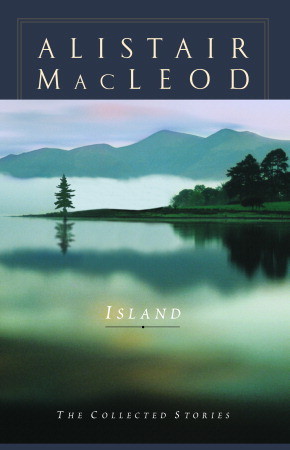
In February, MacLeod's short stories will appear here in an omnibus volume called 'Island.' With that book and 'No Great Mischief,' American readers will have before them this writer's entire oeuvre, a new land that their imaginations can seize like a manifest destiny.
Cape Breton University, 2012Born( 1936-07-20)July 20, 1936, CanadaDiedApril 20, 2014 (2014-04-20) (aged 77), CanadaOccupationNovelist, short story writer, professorAlma mater,Notable works,Alistair MacLeod, (July 20, 1936 – April 20, 2014) was a Canadian novelist, short story writer and academic. His powerful and moving stories vividly evoke the beauty of 's rugged landscape and the resilient character of many of its inhabitants, the descendants of Scottish immigrants, who are haunted by ancestral memories and who struggle to reconcile the past and the present. MacLeod has been praised for his verbal precision, his lyric intensity and his use of simple, direct language that seems rooted in an.Although he is known as a master of the short story, MacLeod's 1999 novel was voted 's greatest book of all time. The novel also won several literary prizes including the 2001.In 2000, MacLeod's two books of short stories, (1976) and (1986), were re-published in the volume. MacLeod compared his fiction writing to playing an. 'When I pull it out like this,' he explained, 'it becomes a novel, and when I compress it like this, it becomes this intense short story.'
MacLeod taught English and for more than three decades at the, but returned every summer to the Cape Breton cabin on the MacLeod homestead where he did much of his writing. In the introduction to a book of essays on his work, editor Irene Guilford concluded: 'Alistair MacLeod's birthplace is Canadian, his emotional heartland is Cape Breton, his heritage Scottish, but his writing is of the world.' Contents.Early life and education MacLeod's Scottish ancestors emigrated to from the Isle of in the 1790s. They settled at on the where it appears they leased farmland. In 1808, the parents with their seven daughters and two sons walked from Cape d'Or to, Cape Breton, a distance of 362 kilometres, after hearing they could become landowners there. Oculus rift s. An account of the journey, written by MacLeod himself, says the family took their possessions with them, six cows and a horse. He adds there were few roads at the time, so his great-great-great-grandparents followed the shoreline.MacLeod was born in,.
His parents, whose first language was, had migrated to Saskatchewan from Cape Breton to during the. The family moved on to when MacLeod was five and then to the town of where his father worked in a coal mine. However, the MacLeods suffered from homesickness and when Alistair was 10, they returned to Cape Breton and the farmhouse in, Inverness County that his great-grandfather had built in the 1860s.MacLeod enjoyed attending school and apparently did well there. He told a interviewer that as a student, he liked to read and write adding, 'I was the kind of person who won the English prize in grade twelve.'
After graduating from high school in 1954, MacLeod moved to Edmonton where he delivered milk for a year from a horse-drawn wagon.In 1956, MacLeod furthered his education by attending the in and then taught school for a year on off Cape Breton's west coast. To finance his university education, he worked summers drilling and blasting in mines in, the and, in the mines of northern. At some point, he also worked at a logging camp on rising rapidly through the ranks because he was physically able to climb the tallest trees and rig cables to their tops.Between 1957 and 1960, MacLeod studied at earning a.
He then went on to receive his in 1961 from the. He decided to study for a at the in because taught creative writing there. MacLeod said he was used to analyzing the work of other authors, but wanted to start writing himself. That wouldn't have happened, he added, if he had not attended such a 'creative, imaginative university.' He wrote his doctoral on the English novelist whom he admired.
'I especially liked the idea,' he told an interviewer years later, 'that his novels were usually about people who lived outdoors and were greatly affected by the forces of nature.' MacLeod was awarded his PhD in 1968, the same year he published The Boat in The Massachusetts Review. The story appeared in the 1969 edition of The Best American Short Stories along with ones by,. Academic career A specialist in of the 19th century, MacLeod taught English for three years at before accepting a post in 1969 at the where he taught English and creative writing for more than three decades. A story published after his death in the student newspaper called him 'a dedicated professor, an approachable colleague, and an inspiration to young, local writers.'
It quoted, one of his university colleagues, as saying that the door to MacLeod's cluttered office was always open to students, faculty and even members of the public. 'It didn’t matter whether you were a good writer or a bad writer; he was open to talking with you, he would read your work, he would be honest with you, and he would be encouraging as well,' Gervais added. 'He could talk your ear off with stories.but he was also a good listener.' MacLeod in his university office, 2013, who studied creative writing at the University of Windsor, remembered MacLeod as a teacher who placed great emphasis on the fundamentals of good writing such as language and, character and conflict, and form.
He wrote that MacLeod read student work carefully and always began his critiques by pointing to the best things about a story before turning to its weaknesses. 'By the end,' Cumyn wrote, 'a story might seem in tatters, but in the oddly inspiring way that gifted teachers and editors have, issues and directions were made much clearer, and many of us felt more confident and enthusiastic about our work than we had going in.' Another student, who attended an intensive writing workshop in, wrote that if something bothered MacLeod about a student story, he would simply say, 'I have a question about that, but not a big one.' If he noticed a glaring inconsistency, MacLeod would say, 'Some words and phrases startle me.' When a student asked how long a good short story should be, 'MacLeod clasped his hands and looked up toward the ceiling as if in prayer, then responded in a lyrical Cape Breton accent. Just make your story as long as a piece of string, and it will work out just fine.'
'MacLeod found that his university duties left little time for creative writing. 'One time correcting all my papers and putting circles around their and there and they're,' he told a radio interviewer, 'I began to think that maybe this wasn't the most worthwhile thing I should be doing with my life and so I said.I'm going to try to write like imaginatively or creatively for two hours a day.' The experiment failed, however, because MacLeod found that by the end of each day, he was too worn out from his academic work to produce stories that were any good. So, he did most of his writing during the summer breaks when his family lived on the MacLeod homestead at Dunvegan,.
He would spend mornings there 'writing in a cliff-top cabin looking west towards Prince Edward Island.' Published works and methods MacLeod published only one novel and fewer than 20 short stories during his lifetime. Writing in longhand, he worked slowly refining his sentences until he found what he felt were just the right words.
'I write a single sentence at a time,' he once told an interviewer, 'and then I read it aloud.' I think we should realize that 'story' is much older than literacy, you know, and that all kinds of people tell stories who can't read and write. But I think that as a writer.I like to give the impression that I am telling the story rather than writing the story.– Alistair MacLeodFellow Cape Breton writer Frank Macdonald described MacLeod as a perfectionist. 'He wouldn't set a story free,' Macdonald said, 'until he was convinced that it was ready.' He added that MacLeod never rewrote a story. 'He wrote a sentence, and then waited, then wrote another sentence.' During a CBC Radio interview in 2011, MacLeod spoke about how he shaped his work.
He explained that halfway through a story, he would write the final sentence. 'I think of that as the last thing I'm going to say to the reader,' he said. 'I write it down and it serves as a lighthouse on the rest of my journey through the story.'
MacLeod's published works include the 1976 short story collection The Lost Salt Gift of Blood and the 1986 As Birds Bring Forth the Sun and Other Stories. The 14 stories in these two volumes appear in. The book, which also contains two new stories, was released in 2000 the year after the publication of his successful first novel No Great Mischief. When asked why, as a master short story writer, he had suddenly turned to the novel, MacLeod smiled and replied: 'Well, nothing I do is very sudden. I think I just wanted more space. I needed a bus rather than a Volkswagen to put my people in.'
In 2004 MacLeod published an illustrated edition of his story, 'To Everything There Is a Season' with the new heading of: 'A Cape Breton Christmas Story'.In October 2012, Remembrance, a story commissioned by the Vancouver Writers Fest to mark its 25 anniversary, was published and sold there as a chapbook.MacLeod's books have been translated into 17 languages. Critical reaction Short stories MacLeod's short stories have generated much critical acclaim, especially from Canadian reviewers.
In her review of Island, for example, calls the book of collected stories about miners, fishermen and Scottish Highlanders who came to Cape Breton 'simply stunning.' She also praises the stories for their emotional impact. 'Whether you are reading his stories for the first or for the eighth time, they will make you wonder and they will make you weep. The quality of the writing matches the very best in the world.'
Itani describes 'The Boat', MacLeod's first published story (1968) as possibly the most moving and powerful in Canadian literature. For her, all of the stories show a master craftsman at work. 'Every story is expertly paced. The internal rhythm has been so perfected, the stories appear to unfold by themselves. There are no tricks; there is no visible or superimposed planning or plotting. Events unfold as unpredictably as life itself.'
The essayist Joshua Bodwell wrote about discovering MacLeod while traveling in Cape Breton just months before his first child was born, and then later reading 'The Boat' aloud to her near her tenth birthday in his piece 'The Great Salt Gift of Alistair MacLeod’s “The Boat.' 'The English literary critic, on the other hand, criticized what he saw as 'a certain simplicity, even ' in many of the stories in Island. He also found some of them overly adding: 'Several of MacLeod's stories have a quality of emotional genre-painting, and display a willingness to let the complexities of character die into. The men are white-haired and silent, the women dark-haired with sharp tongues.'
Although Wood conceded MacLeod's status as a writer, he pointed to certain flaws. 'MacLeod is a distinguished writer, but his strengths are inseparable from his weaknesses: the sincerity that produces his sentimentality also stirs his work to a beautifully aroused plainness.'
Wood singles out one story, 'The Tuning of Perfection', however, for its 'complete lack of sentimentality.' He writes that by delicately retrieving the past, MacLeod achieves a fineness removed from much contemporary North American fiction.
He concludes that in this story, MacLeod 'becomes only himself, provokingly singular and rare, an island of richness.' Novel MacLeod's 1999 novel, No Great Mischief tells the story of the red-haired and dark-eyed MacDonald clan from 1779 when they left Scotland to settle in Cape Breton to more recent times. The judges, who awarded MacLeod the International IMPAC Dublin Literary Award in 2001, described the novel as 'a story of families, and of the ties that bind us to them.
It is also a story of exile and of the ties that bind us, generations later, to the land from which our ancestors came.' They went on to predict that the quality of MacLeod's writing would soon make his name a household word. 'The music of the Cape Breton rings throughout this book, by turns joyful and sad but always haunting. Written in a hypnotic, stately prose where every word is perfectly placed, ‘No Great Mischief’ has the same haunting effect, and shows why the master craftsman took more than ten years to write it.' MacLeod reads from his workThose observations were echoed by many reviewers. In, for example, praised the book's lyricism and reported that 'MacLeod's world of Cape Breton – with its Scottish fishermen and their displaced heirs, the miners and young professionals it has mournfully sent to the rest of the nation – has become a permanent part of my own inner library.'
Mallon's main criticism was that parts of the novel came across as heavy handed, lacking the deftness of MacLeod's short fiction. He ended, however, by noting that MacLeod's entire body of work would soon be published in the U.S. Granting American readers 'a new land that their imaginations can seize like a.' In the British newspaper, The Observer, pointed out that when it was first published, No Great Mischief drew 'unqualified praise' from the critics. Her review of the paperback edition concluded: 'In its poetic and emotional range, this is one of the richest novels of recent years.' The Globe and Mail's critic heaped praise on both the book and its author: 'The book has it all: beauty,tragedy, grittiness, humour, darkness, love, music, raunchiness, poetry and a glut of fully drawn, extraordinary characters whose words and deeds and circumstances compel the reader to laugh and blush and weep and swell with bighearted pride.MacLeod is MacLeod, the greatest living Canadian writer and one of the most distinguished writers in the world. No Great Mischief is the book of the year – and of this decade.
It is a once-in-a-lifetime masterpiece.' Scholarly studies MacLeod's fiction has been studied extensively by post-graduate students. Their master's and doctoral theses explore many aspects of his work including issues concerning regional and ethnic identity; the influence of island boundaries; magical thinking; and, the traditional roles of men and women. MacLeod's work has been compared and, in some cases contrasted, with other Canadian authors such as,. Family MacLeod was married for nearly 43 years to the former Anita MacLellan.
She grew up in a house on Cape Breton Island that was just a couple of miles from his. They were married on September 4, 1971. They had seven children: six sons and a daughter, with one son dying in infancy.
Their oldest son is also a writer, whose debut short story collection Light Lifting was a finalist in 2010. Death MacLeod died on April 20, 2014, after suffering a stroke in January 2014. His funeral mass was held in the St. Margaret of Scotland, in Broad Cove, Cape Breton near his home in Dunvegan. He was laid to rest in the nearby graveyard where generations of MacLeods are buried. Film about MacLeod He was the subject of a documentary film by the, Reading Alistair MacLeod, released in 2005. The 88-minute film, directed by, includes interviews with MacLeod, his wife Anita and other family members.
Prominent writers such as, and read from and comment on MacLeod's writing. The film also features excerpts from composer Christopher Donison's opera Island based on one of MacLeod's short stories. Awards and honours Macleod's 1999 novel won several awards including the International IMPAC Dublin Literary Award, the, the, the Dartmouth Book & Writing Award for Fiction, the for author of the year as well as fiction book of the year (2000) and the Atlantic Provinces Booksellers' Choice Award. In 2009, No Great Mischief was voted Atlantic Canada's greatest book.MacLeod won the in 2001. The prize, awarded by the Province of Nova Scotia, honours artistic excellence and achievement.In 2003, he won the for fiction.In 2008, MacLeod was named an Officer of the, the same year he became a Fellow of the.In 2009, MacLeod received the for Short Fiction along with.MacLeod has been awarded more than a dozen honorary degrees including ones from his alma mater, St. Francis Xavier University, and the. References.